
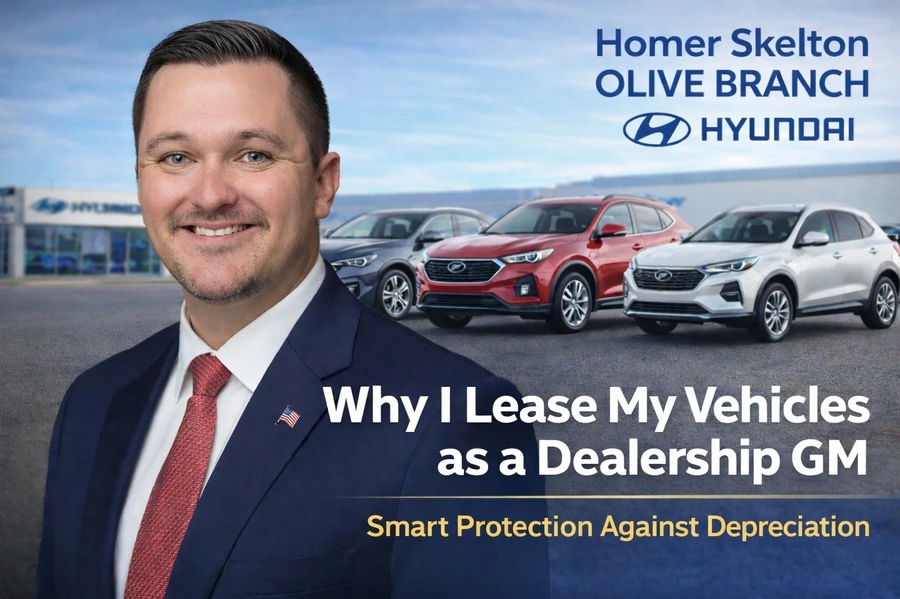
By Brennon Chapman
General Manager, Homer Skelton Hyundai
If you live in the Mid-South or anywhere in the Southeast, you have probably heard this before:
“I don’t lease. I want to own my car.”
That mindset is very common here, and I understand it. Leasing is not talked about much in our region, and for years it has been misunderstood or dismissed altogether.
Here is something that might surprise you though.
I lease my car.
My wife leases her car.
And I am the General Manager of a Hyundai dealership.
Not because it is trendy.
Not because someone talked me into it.
But because financially, it made the most sense for how we actually use vehicles.
Let me explain why.
The Reality Most People Do Not Talk About: Depreciation
Most families do not keep vehicles forever.
Whether you buy or lease, the truth is that most people are on a three to four year trade cycle. Life changes. Needs change. Technology changes.
When you buy a car, every few years you walk back into a dealership holding your breath and asking one question:
“What’s it worth?”
Sometimes you are pleasantly surprised.
Other times you are not.
You might be upside down.
You might have less equity than you expected.
You might need to roll negative equity into the next vehicle.
That uncertainty is depreciation risk, and it is very real.
What Is a Residual Value and Why It Matters
One of the most important concepts in leasing is the residual value.
The residual value is the vehicle’s pre determined value at the end of the lease, set on day one by the manufacturer’s leasing company. It is based on projected depreciation, historical data, and market trends.
In simple terms, the residual is what the vehicle is expected to be worth when your lease is over.
This matters because your lease payment is based largely on the difference between the vehicle’s original price and its residual value. You are only paying for the portion of the vehicle you use, not the entire car.
More importantly, the residual creates clarity and protection.
At lease end, three things can happen:
If the market value of the vehicle is higher than the residual, you have equity and can sell it or trade it.
If the market value is lower than the residual, you can return the vehicle and walk away.
If you love the vehicle, you can purchase it at the pre set residual price and refinance it.
That is the power of a residual. It removes the guesswork and locks in your exit strategy before you ever drive the car home.
Why We Lease: It Removes the Guesswork
When you lease, the future value of the vehicle is set from day one.
That means no guessing what the market will do three years from now. No worrying about sudden drops in resale value. No pressure at trade in time.
As someone who thinks a lot about financial risk, that peace of mind matters to me.
Leasing Is About Cash Flow and Flexibility
One of the biggest myths I hear is that leasing is “throwing money away.”
That is not how financial professionals look at it.
Nationally recognized leasing expert Buzz Doering, author of The Buzz on Leasing, describes leasing as a cash flow and risk management tool, not a shortcut.
In practical terms, leasing often means:
Lower monthly payments
Less money due up front
More cash available for savings, investments, or emergencies
Reduced repair risk since most leases stay under factory warranty
For many households, that predictability is valuable.
Driving Newer, Safer Vehicles More Often
Leasing also typically means you are driving a vehicle that is:
Under factory warranty
Equipped with modern safety technology
More fuel efficient
Updated with current infotainment and driver assistance features
Instead of hoping a vehicle ages well for eight or ten years, leasing allows you to intentionally refresh every few years.
That is not irresponsible. That is planned.
Leasing Is Not for Everyone, But It Is for More People Than You Think
To be clear, leasing is not automatically better than buying.
But if you tend to trade every three to four years anyway, want protection from depreciation, prefer predictable payments, and value flexibility, leasing is absolutely worth considering.
That is why my family does it.
My Bottom Line
Leasing is not about being sold something.
It is about understanding how vehicles fit into your financial life.
For us, leasing reduced risk, improved cash flow, removed stress at trade in time, and gave us options instead of pressure.
If you have never leased before, especially living in an area where it is less common, I encourage you to at least learn how it works.
And if you have questions about leasing or car buying in general, I am always happy to answer them, even if you are not buying a Hyundai and even if you never buy from us at all.
My goal is simple.
Help people make informed decisions that actually fit their lives.
That is good business, and it is the right thing to do.


